
Your Face Is Ours: Introducing the Poetry of Olga Livshin and the Artwork of Daniela Astone

Daniela Astone writes that she looks into nature in order to find the human. For Olga Livshin perhaps it is the other way around. Growing up in the Ukraine and Russia, questions of war and peace are very real. For Livshin true freedom is found running behind her puppy. For both of these creators the world is both exquisitely beautiful and terribly scary—as is our world today.
**Please note: for the poem “Esther and Peace,” if you are reading on your phone please turn the screen horizontally to get the correct formatting of the poem. Thank you!
Esther and Peace

“I am going to kill you, Esther,” War whispers. War is haggard, she wears a sheer
gown. It’s 1945 in Odesa. My grandmother mutters: “Please. My little son,
gone. Husband, killed at the front. My father… in one year. May I
please be dismissed?” “Oh,” War remembers. “No. I will sip you
slowly. Will transmute your me into memory. Every you
will be landfill. When you rest, the dead will command
you. And I will feast on you.” War closes her eyes. “I
will snake my way into your room, under –”
“Save your breath,” Esther says. “Not
living. Already there. Where
do I sign?” War sinks
into Esther
when

Peace
quietly enters,
arms full of daisies. Peace
is a sunburned pilot, back from
combat. He says: “Esther, I have seen
a similar darkness. Gray nights, blood on my
friends’ uniforms. When you and I tango, we uplift
each other. Could we do that with the rest of our lives?” Esther
sighs: “My reasons for living left.” Peace thinks, gray eyes cast down.
“Our children,” he offers, “will hug you. Their eyes will echo the lightless.”
Esther whispers: “I signed the pact in blood.” Peace says: “Our peace will be
war-like. A pumpernickel brick, per day, for our whole family. Our apartment
will hold fifteen people. To wash our children’s clothes, I will go out into the cold.
When the KGB wants you, I’ll carry your suitcase. In this harshness, can you shine?”

Esther looks away, shrugs: “I’ll try.”
The Roommate
                  For Robbin Légère Henderson

Every morning, the specter of our dead
awakes in a nest of languages we forgot.
He boils a beet, a regret, then evaporates
into work. But when our next-door

neighbor yells, Who is to blame
for trash in the streets? For microplastics
and STDs? Surely, the Jews! – our roommate
blasts: Hear, o Israel! What is the latest

slur, who is the next president, when
are we leaving, when, what continent now.
We wanted our ancestor close, now our minds
are airport towers full of air traffic controllers

with PTSD, a chorus that slipped out
of Carmina Burana. Our roommate weeps:
Danger, Bubbeleh, I am so lonely. Save
the plastic mask of calm for others,

get us a ticket for the next spaceship
to safety – Hush, sweet ghost. No one
stands to the right of our drowsing bed;
no missiles or bayonets. Only you,

tender voyeur, guarding our sleep.
You led us here, but here is never here
under our feet, never gorgeous like dandelion fluff.
And still your face is ours.
Dog in a World
                  After Alicia Ostriker

As if there is a universe
with no loss,
a close cosmos of total playfulness,
my dog bounds down the street
on hind paws, like a huge gray rabbit,
biting the leash, swarming with it,
and, willingly or un-,
I run.

My head aches with the news,
I am a weight to the flying puppy balloon.
But the dog knows a different truth,
he turns around and looks – Please –
more universe
and I move faster, we run
and his long fur undulates in the wind.

As if excitement ripens simply
like bread rising, beer fermenting,

his limbs are sharpened by the beaming time,
mind prickled by efflorescence,
cobalt thirst spilling above,
the glowing joys barking across the street.

He turns around and asks: Pretend
you live here.
Spell Casting, 1941

Hona draws a circle on the rich Ukrainian earth
around her cow, who is out of breath
from the long walk, her husband and little son.
She says, “Shoo, ghost of war!” The deed isn’t done;

Hona whispers: “I see you. See you haunt the world.
You chased us out of our village. A little sack
is all we took. But you are gross. Lumpy with mud.
You can’t stand next to the clean me. I send you back!”

Hona wipes her tears. It’s useless. What spells?
The whole continent caught the evil eye. To yell
for help? Useless. All paths to safety, invaded.
She calls out into the field and gloomy forest:

“My older boys left for the front, my Osya and my Semyon.
I prayed, rocked, and rubbed the wall, made a dent on
that wall. Then, no thanks to you, we left our home.
War monster! You will not leave a hole in my soul.

You may have taken all, but I have my beliefs.
You come from hitlers. I come from Eve.

A bridge was blown up? We’ll swim to the other shore
of the Tylihul River—cow and all, heads held high.
The enemy might catch up? That’s what matches are for,
hidden in my thick, pretty hair. I choose the way I die,

and I want to live. I’m sure you’d love to see me wail.
I imagine my descendant, stuck in her own grim
war, remembering me with a smile
as she looks up the big question: ‘Can cows really swim?’”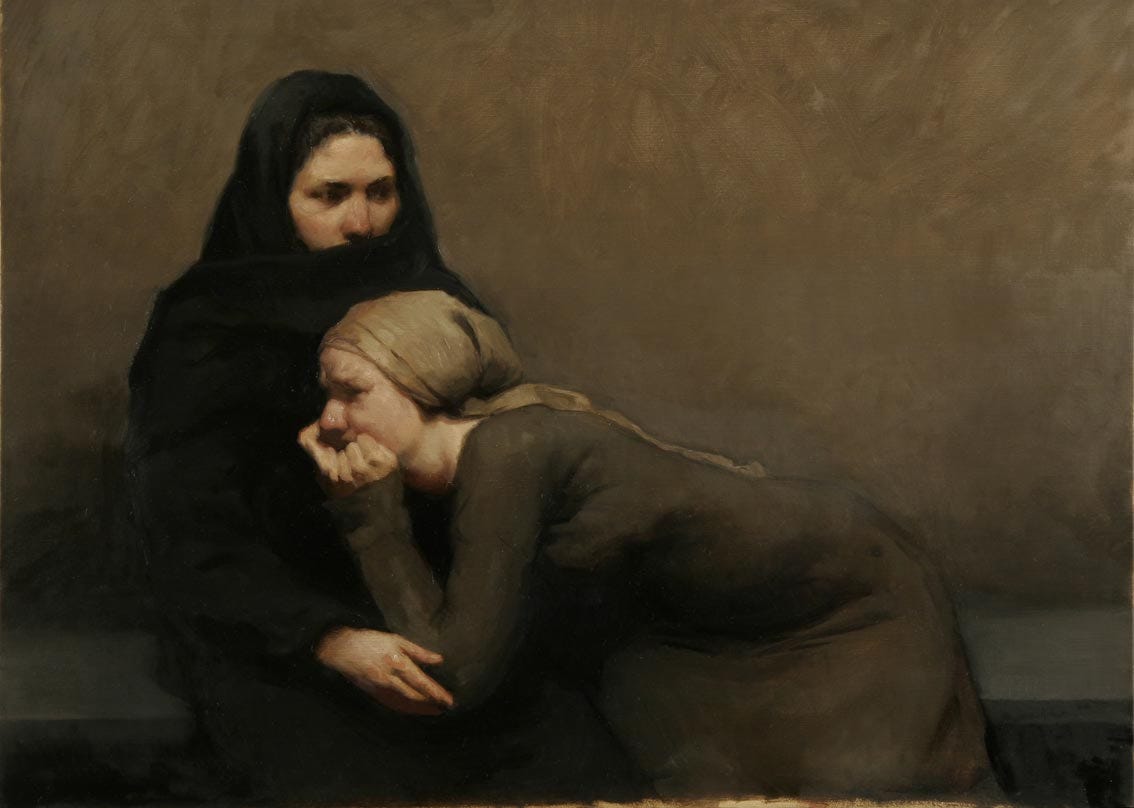
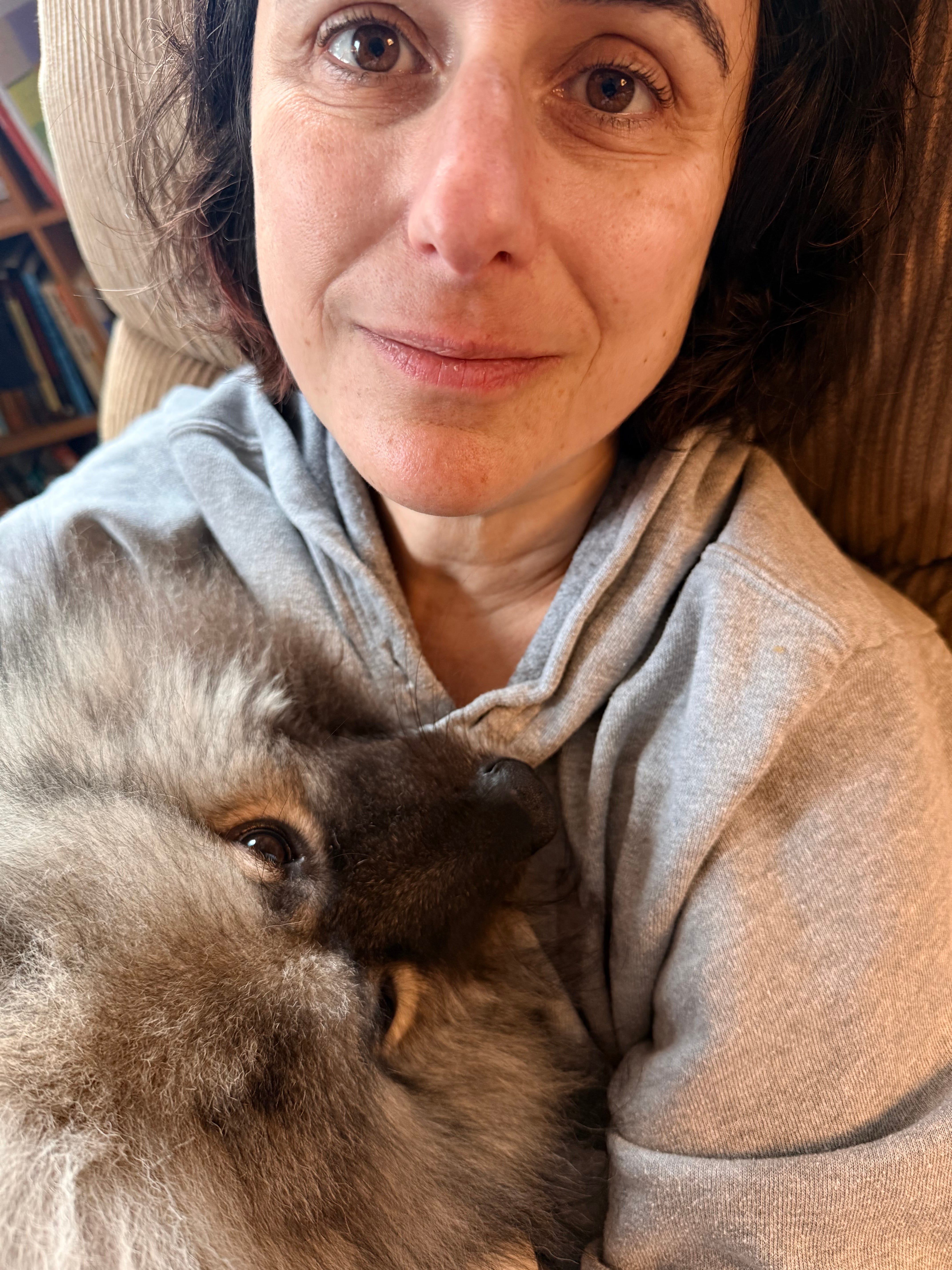
Olga Livshin’s poetry recently appears in Poetry and the Southern Review, and is forthcoming from AGNI. She is the author of A Life Replaced: Poems with Translations from Anna Akhmatova and Vladimir Gandelsman (Poets & Traitors Press, 2019). More at www.olgalivshin.com
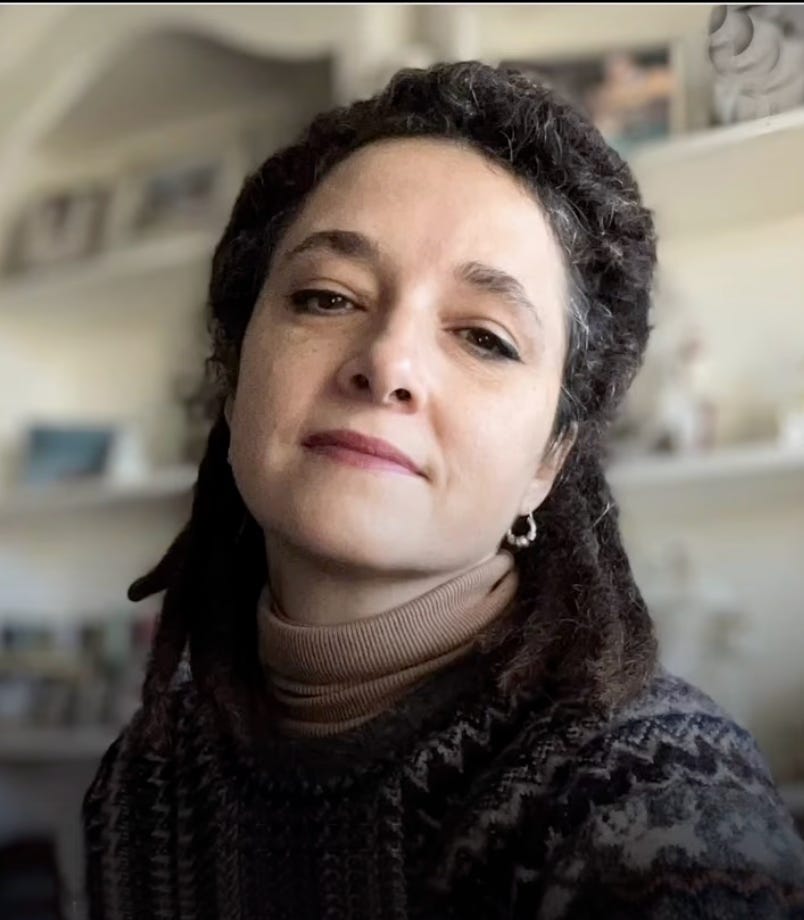
Born in Pisa 1980 Daniela Astone grew up in the sea-town of Porto S. Stefano in Maremma (Italy). In 1998 after graduating from the visual arts high school of Grosseto she moved to Florence to study illustration at the International School of Comix. In 2001 she enrolled at the Florence Academy of Art, where she graduated in 2004. Astone is currently the intermediate program director of The Florence Academy of Art, Florence Italy.
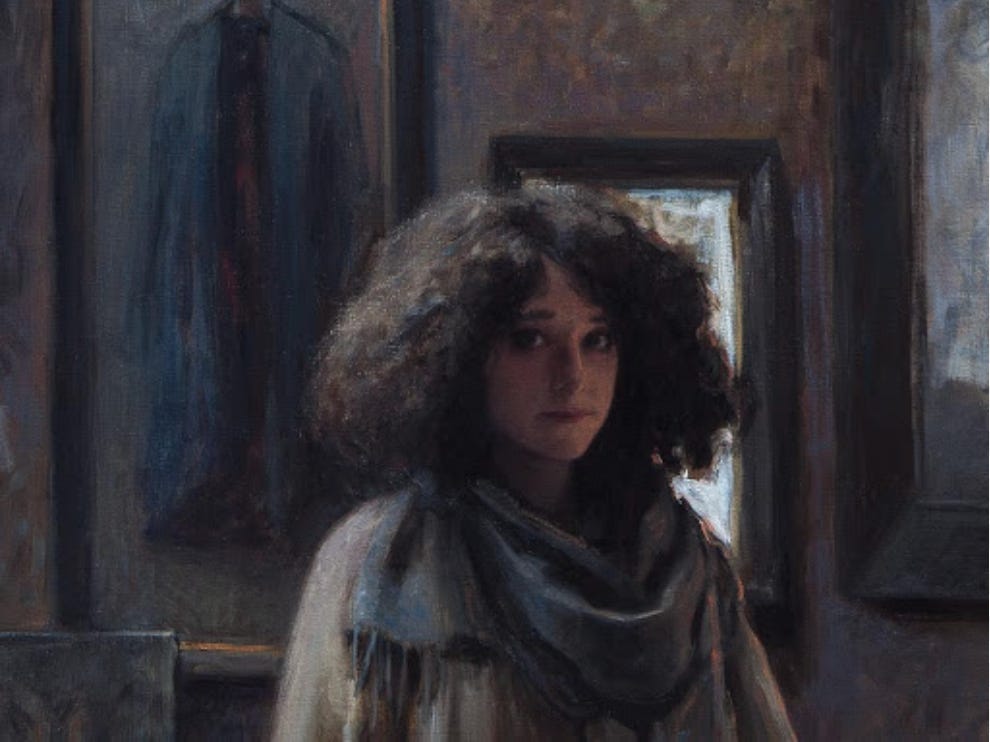
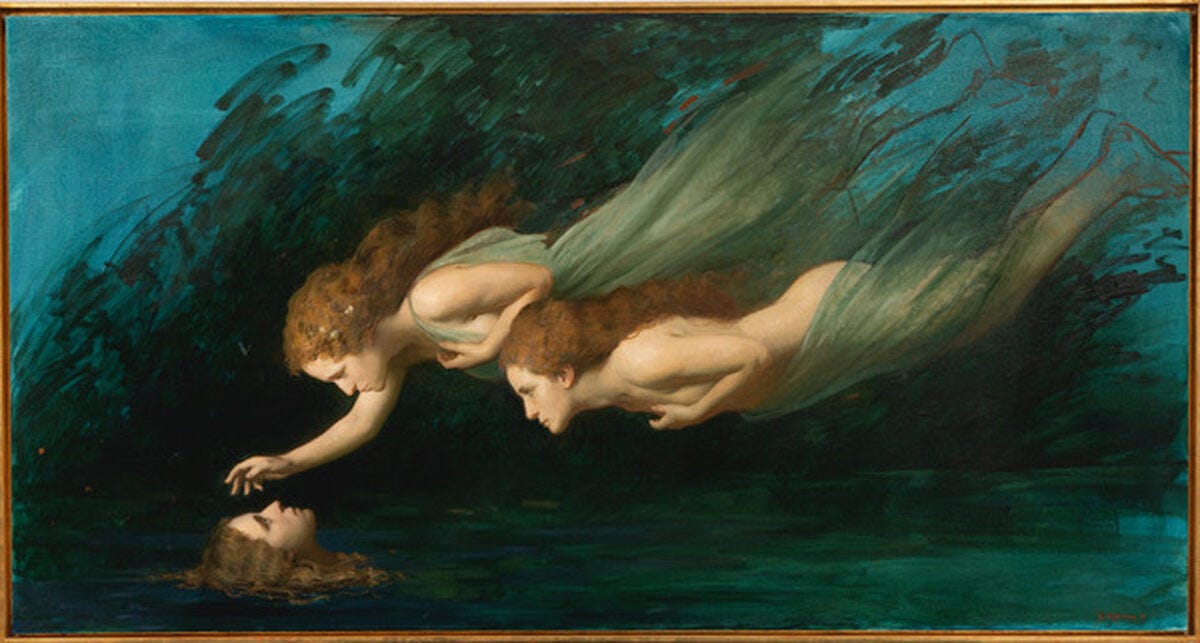
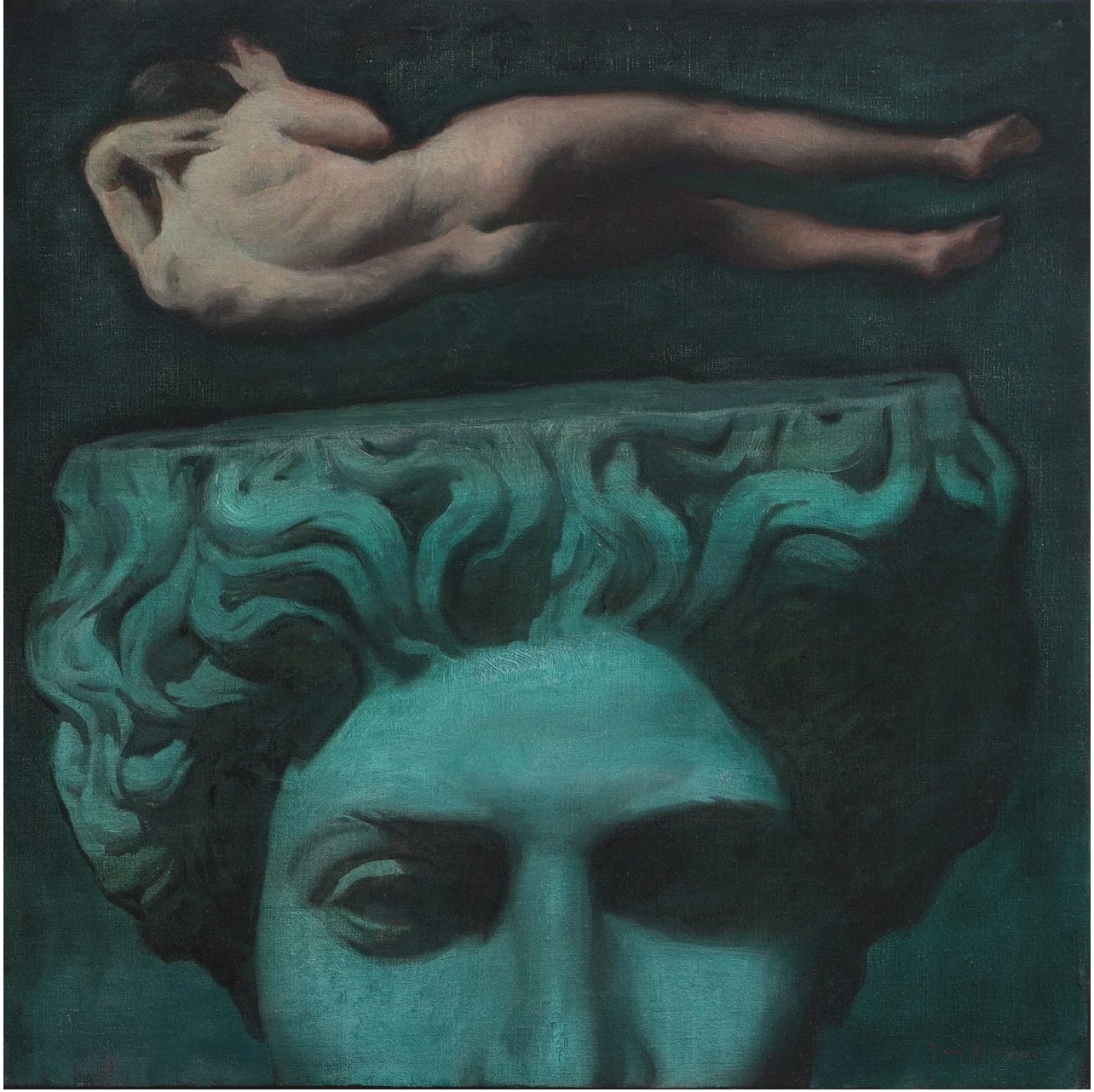
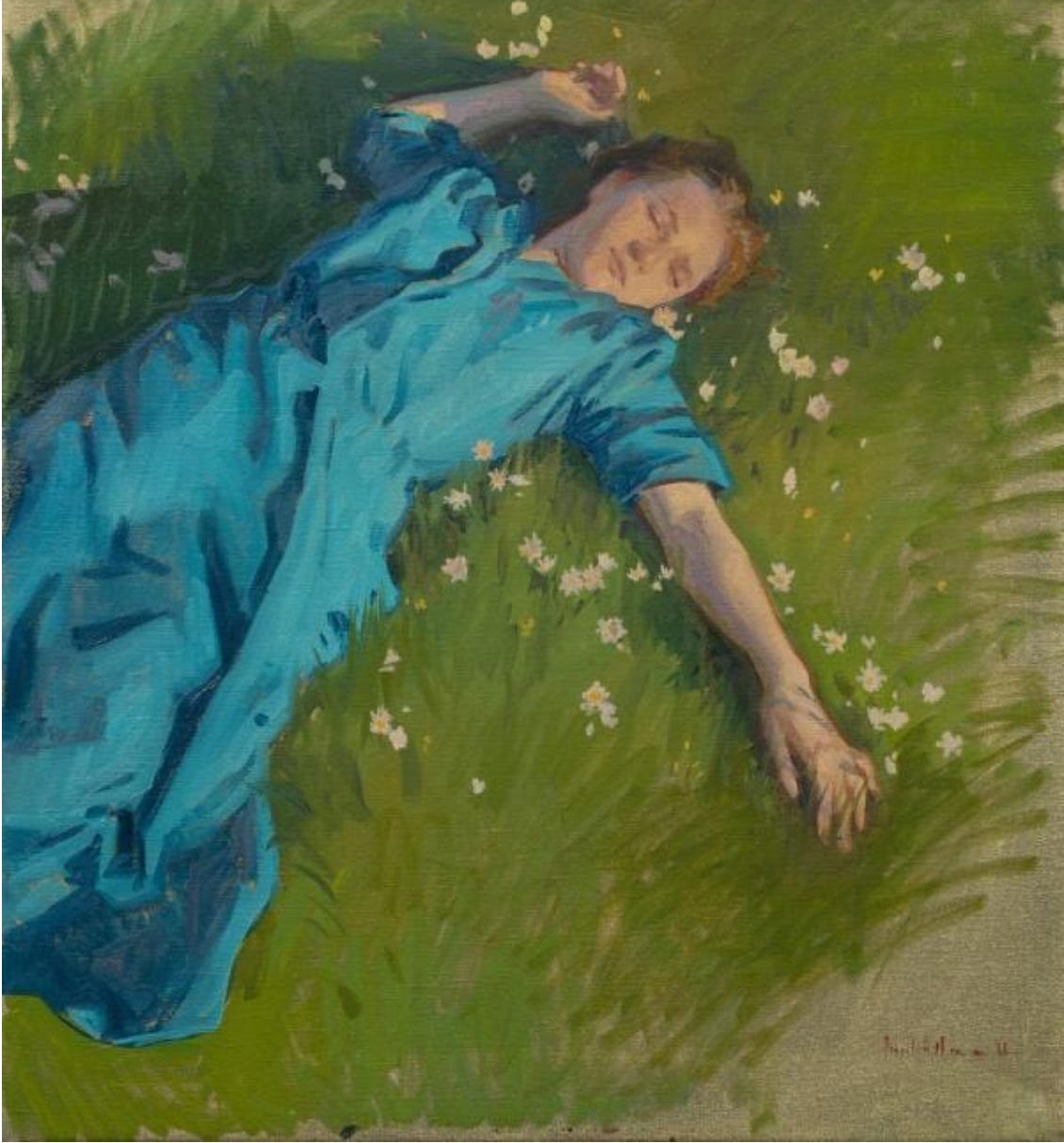
“The relationship I have with my environment is very important to me and so also for my art. When I am creating I loose track of time in my conversations with nature. When I make comparisons (each pear from my tree is different — this pear is like a face in a crowd) I begin to think of things symbolically. In life I experience two parallel worlds Nature and that of Mankind. In my art I am able to cross into nature to better express my feelings about humanity.” – Daniela Astone
Gorgeous poems!
Marvelous issue!